PROJECT TYPE: Brand Strategy, SVA Graduate Thesis led by Debbie Millman
ROLE: Brand Strategist, Creative Strategist
TEAM: Dianna Loevner, Piyush Bhagat, Zachary White
YEAR: 2025
How does The New York Times stand for truth in a post-truth era?
Context:
Over the course of its 173-year history, The New York Times has shaped public discourse, earned more Pulitzer Prizes than any other news organization, and set industry benchmarks in storytelling, design, and digital innovation. But today, profound cultural and technological shifts challenge its role as a guardian of credible journalism. New competitors including influencers and AI-driven content can capture more attention and spread lies disguised as truth. And in adapting to a fragmented media landscape, the paper has neglected its commitment to truth in favor of a false neutrality that obscures facts, confuses readers, and undermines its credibility.
The Challenge:
How can we use the brand’s principles to reaffirm its status as a credible voice?
The Opportunity:
The New York Times must double down on what makes it irreplaceable: its willingness to carry the “Weight of the Word.” Every sentence published carries institutional responsibility and accountability to its readers. This disciplined commitment to rigor, accuracy, and context is what separates real journalism from noise. In an era of rampant misinformation, the Times’ competitive advantage is the trust earned through treating words as consequential.
To regain the credibility essential to the brand, The New York Times must reposition all of its actions in pursuit of truth.
New Positioning→In Pursuit of Truth
Three Territories:
DEEPENING INSIGHTS: Helping readers see beyond their current point of view and offering deeper insights.
EXPANDING ACCESS: Ensuring truth is available and visible to more people.
AMPLIFYING NEW VOICES: Creating space for more diverse voices finding truth in culture.
DEEPENING INSIGHTS
Behind the Byline
‘Behind the Byline’ pulls back the curtain on the journalistic process, revealing both the work and the people behind it. Through features including reporter voice notes, annotations, and sourcing details, readers gain insight into the reasoning and integrity behind each article.
DEEPENING INSIGHTS
Past Tense
Past Tense is an archival tool that uses AI-powered data mining and pattern recognition to link today’s events to historical precedents—giving readers richer insights into the issues shaping our world.
The software creates an interactive timeline that weaves together people, events, and cultural shifts by drawing on one-hundred and seventy years of New York Times archival reporting and photography.
DEEPENING INSIGHTS
Counter Feed
Counter Feed transforms the current “you page” in the NYT mobile app into a content curation page designed to expand readers’ world view instead of narrowing it.
This algorithm will recommend articles that intentionally go beyond user preferences and offer contrasting ways of seeing and thinking.


EXPANDING ACCESS
Open Books Project
As book bans restrict children's access to truth and ideas, The New York Times champions intellectual freedom by sponsoring banned book sections in bookstores and releasing free digital copies online.
AMPLIFYING NEW VOICES
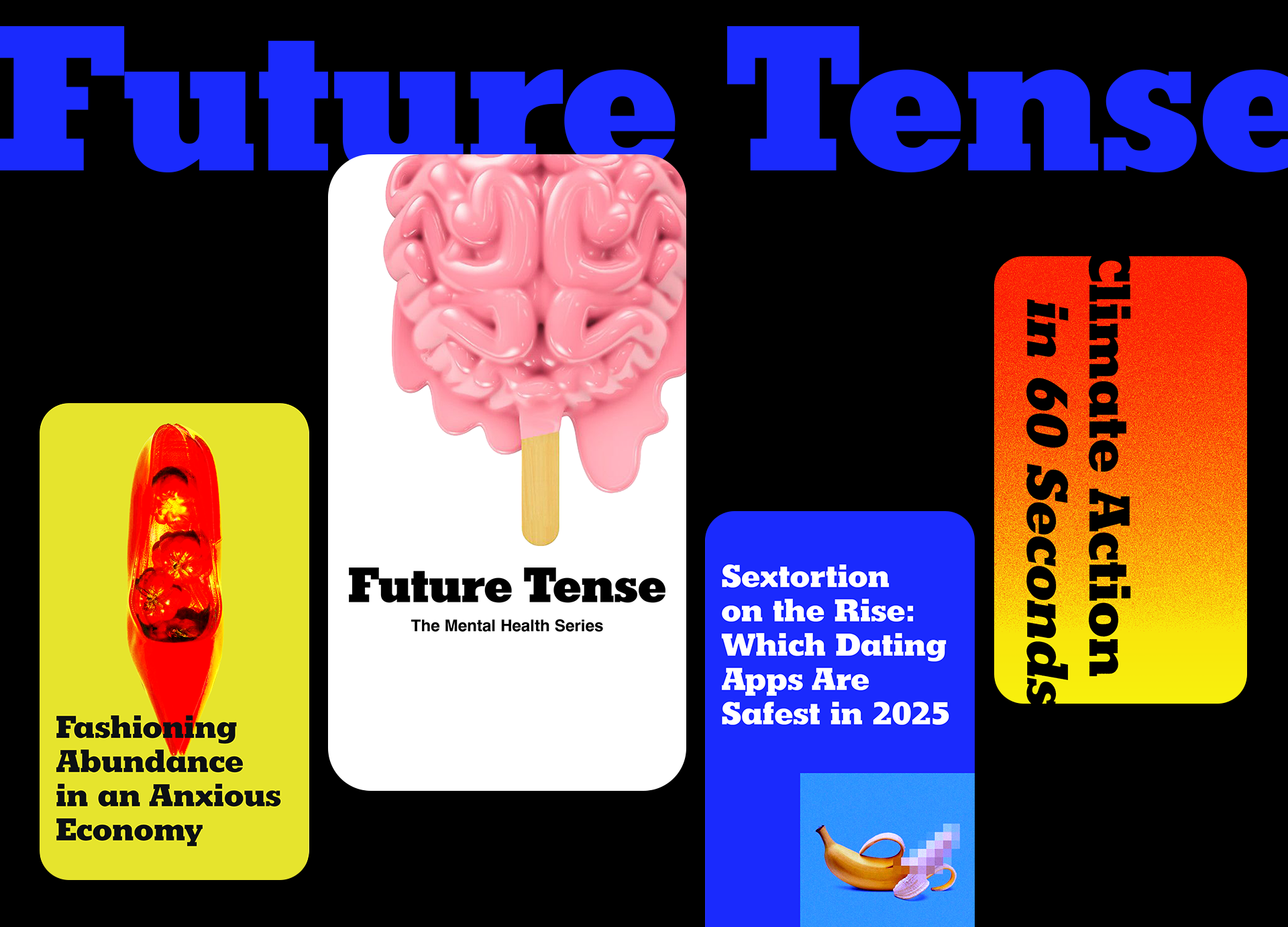
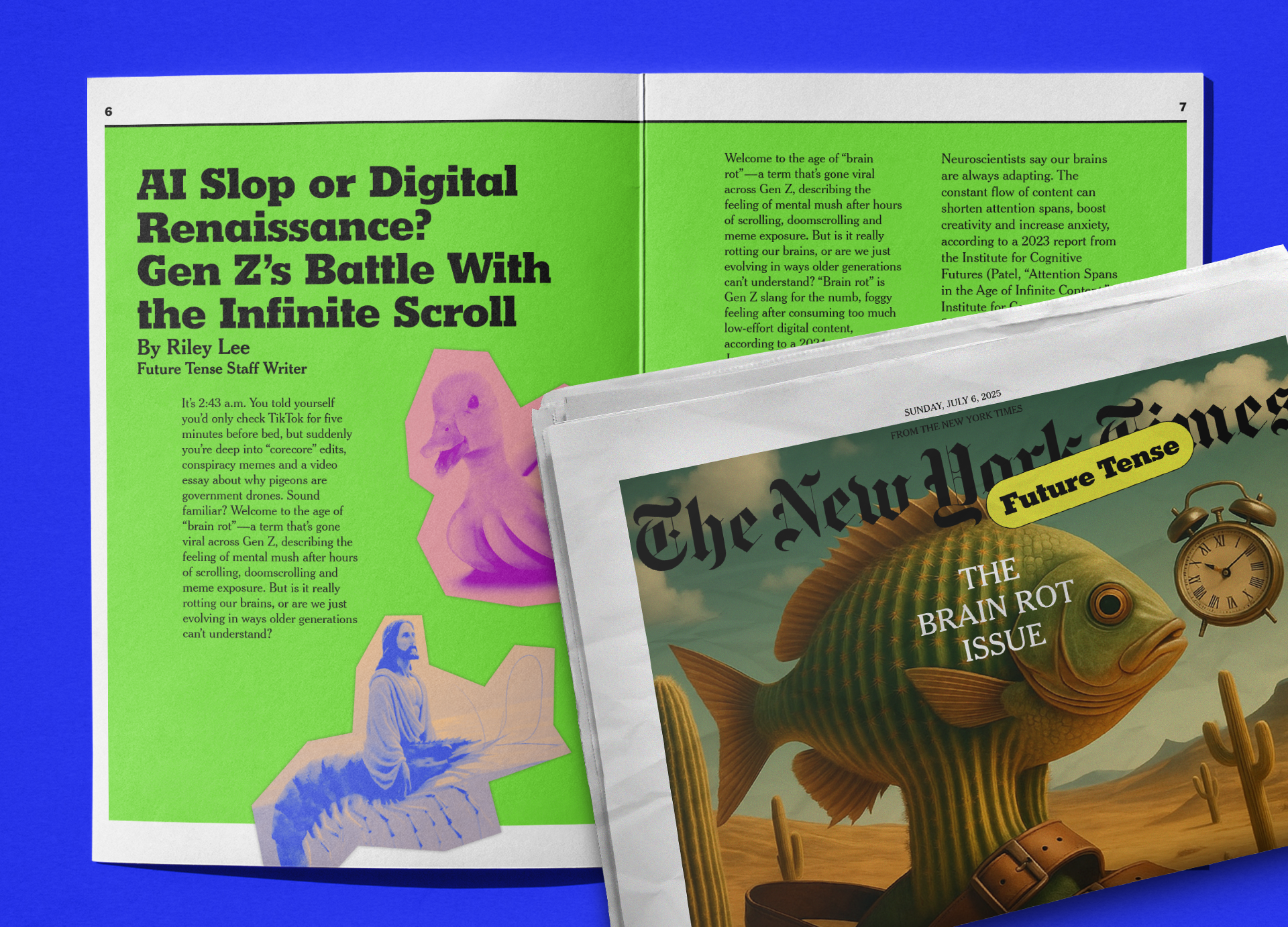
Future Tense
At a time when many young people report a sense of disconnection from traditional news, The New York Times will create Future Tense—a new section and quarterly publication built for and with Gen Z.